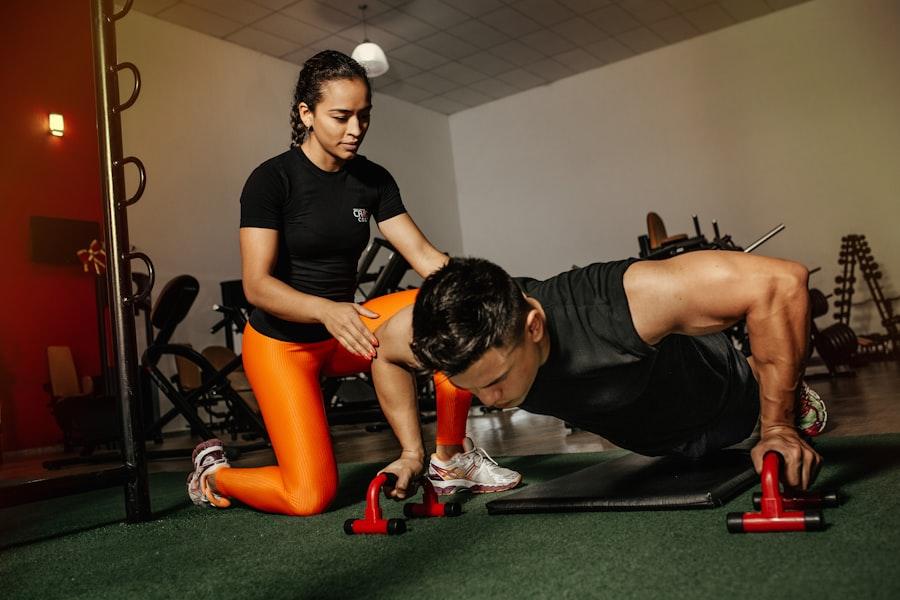
Worried about failing the personal trainer exam? You’re not alone — it’s the most common concern we hear from career changers. The honest answer: CPT exams are passable with proper preparation, but they’re not easy. Roughly 30–45% of first-time test-takers fail depending on the certification. Let’s break down what you’re actually up against.
For help choosing which exam to take, see our certification guide.
~65%
NASM Pass Rate
First attempt
~60–70%
ACE Pass Rate
Estimated
~56%
NSCA CSCS Rate
Published data
8–16 weeks
Study Timeline
Depending on background
Pass Rates by Certification
Not all exams are equally difficult. Here’s what the data shows:
NASM CPT has a first-time pass rate of approximately 65%, meaning roughly 1 in 3 candidates fail their first attempt. NASM’s exam is proctored, 120 questions, and covers exercise science, program design, and their proprietary OPT (Optimum Performance Training) model. The OPT model is the most commonly cited difficulty — it’s NASM-specific content you won’t know from gym experience alone.
ACE CPT doesn’t publish exact pass rates, but industry estimates put first-time pass rates at 60–70%. ACE’s exam emphasizes behavior change coaching alongside exercise science, which can surprise candidates who prepared only for anatomy and program design.
NCSF CPT doesn’t publish official pass rates either, but the exam is considered moderately challenging — comparable to ACE. The content is science-forward with strong emphasis on applied exercise physiology and program design. See our full NCSF review.
ISSA CPT has the highest effective pass rate because the exam is open-book and unproctored. Most prepared candidates pass. The trade-off is the NCCA accreditation gap.
NSCA CSCS is the hardest at roughly 56% pass rate — but it’s a specialized credential requiring a bachelor’s degree, not a standard CPT. See our certification guide.

What Actually Makes the Exam Hard
It’s not that the content is impossibly complex — it’s that the exam tests applied knowledge, not memorization. Three areas trip up the most candidates.
Anatomy and exercise science fundamentals. You need to know muscle origins, insertions, and actions — not just names. Questions ask things like “which muscle is the primary mover during a lat pulldown?” and expect you to understand why, not just recall a flashcard.
Program design and periodization. Designing a training program for a specific client profile — accounting for their goals, limitations, and training history — requires synthesis, not memorization. This is where gym experience helps but isn’t sufficient without structured study.
Certification-specific content. Every cert has proprietary models or frameworks. NASM has the OPT model. ACE has their Integrated Fitness Training (IFT) model. NCSF emphasizes energy systems and applied physiology. You must learn the specific framework your exam tests — general fitness knowledge alone won’t pass.
Key Takeaway
The exams don’t test whether you can train someone in a gym. They test whether you understand the science behind why you’d program a specific exercise for a specific person. That gap between practical experience and theoretical knowledge is where most failures happen.
Study Timelines by Background
Fitness enthusiast with gym experience (no science background): 10–14 weeks. You understand exercises intuitively but need to learn the science vocabulary, program design frameworks, and anatomy at a deeper level. This is the most common career-changer profile.
Science or healthcare background (nurse, biology degree, etc.): 8–10 weeks. Anatomy and physiology are already familiar. Focus study time on certification-specific models and program design applications. If you’re a nurse transitioning to training, you have a major head start here.
Zero fitness or science background: 14–20 weeks. Everything is new — anatomy, exercise technique, energy systems, and program design. Consider a study course with video instruction rather than self-study alone. It’s absolutely doable, but don’t rush it.
Study Strategies That Work
Active recall over passive reading. Don’t just read the textbook — close it and quiz yourself. Practice tests are the single highest-ROI study tool. Take the official practice exam early in your study period (not just at the end) to identify weak areas.
Spaced repetition for anatomy. Flashcard apps (Anki is free) with spaced repetition scheduling help you retain muscle names, origins, and actions far better than cramming. Budget 15–20 minutes daily on flashcards throughout your study period.
Program design practice. Write mock training programs for fictional clients with specific profiles. This is the most practical study method for the applied questions that trip people up.
Study the certification’s framework, not just general fitness. If you’re taking NASM, master the OPT model. If ACE, learn the IFT model. If NCSF, focus on energy systems and applied physiology. Generic YouTube fitness content won’t cover these.
The 80/20 Rule for Exam Prep
Roughly 80% of exam questions come from four domains: anatomy/physiology, exercise technique, program design, and the cert’s proprietary model. Spend 80% of your study time on those four areas. Nutrition, business, and legal topics appear but aren’t heavily weighted on most CPT exams.
Common Mistakes to Avoid
Starting the practice exam too late. Take it in week 2, not week 10. It shows you what the exam actually asks — which is often different from what you assumed.
Relying on gym experience alone. Being fit and knowledgeable about training doesn’t mean you’ll pass. The exam tests scientific reasoning, not practical coaching ability.
Cramming the last week. CPT exams cover broad content. Consistent daily study over 8–12 weeks beats intensive last-minute sessions every time.
Ignoring weak areas. Most candidates overstudying what they already know and avoid topics they find difficult. Flip that — spend extra time on your weakest domains.
Choose a Cert You Can Actually Pass and Afford
NCSF CPT offers NCCA accreditation, strong study materials, and a science-focused exam at roughly half the cost of NASM. Lower financial pressure means less exam anxiety.
Affiliate link — we may earn a commission at no extra cost to you.
The Bottom Line
CPT exams fail 30–45% of first-time test-takers — they're not easy, but they're entirely passable with structured preparation. Budget 8–16 weeks depending on your background, use active recall and practice exams from day one, and focus 80% of study time on anatomy, program design, exercise technique, and your cert's specific framework. The candidates who fail almost always underestimated the science content or relied too heavily on gym experience. Put in the study hours and you'll pass.
Related Articles
Explore these related articles for deeper study: